
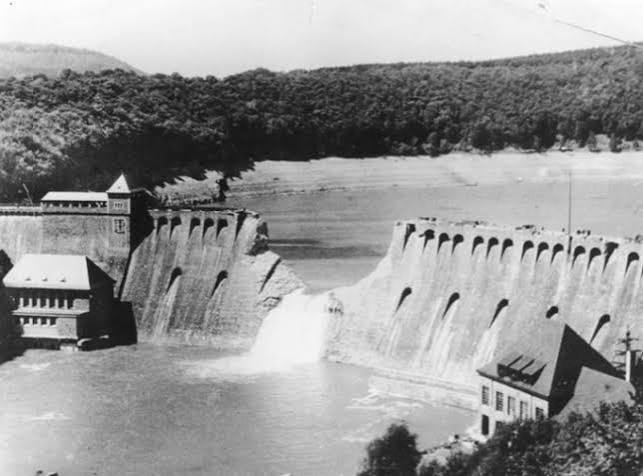
Overview of the Banqiao Dam Incident
Historians recall Banqiao Dam Disaster 1975: How Typhoon Nina Triggered a Catastrophic Flood as one of era’s worst dam failures. Consequently, what began with a powerful tropical storm became a massive flood that toppled several dams and affected millions.
Banqiao Dam Disaster Context
Moreover, Banqiao Dam Disaster 1975: How Typhoon Nina Triggered a Catastrophic Flood occurred in August 1975 in Henan Province.
Consequently, Typhoon Nina brought heavy rainfall that strained the dam and surrounding reservoirs.
According to the account presented in the source material the disaster was not simply the result of a storm. Design limitations, inadequate maintenance, communication failures and the inability to release water all contributed to the unfolding catastrophe.
How did a dam considered extremely strong become overwhelmed?. How did the collapse of one dam lead to the failure of dozens of others?
To understand the Banqiao Dam disaster we need to go to the beginning.
Additionally, The Construction of Banqiao Dam.
The story of the Banqiao Dam began in the years of China’s large-scale water-control projects.
Engineers built the dam as part of a system to control flooding in the Huai River basin. The basic idea was straightforward: store quantities of water arriving from the surrounding mountains and use a network of dams and reservoirs to control the flow downstream.
The project represented an engineering effort for its time. Banqiao Dam became a component of a much larger network of water-control structures.
Engineers designed the dam to withstand weather and protect against flooding. Its reputation for strength eventually earned it the nickname “Iron Dam.”
However rainfall and flooding would eventually test the confidence surrounding the structure.
A Warning About the Dams Design.
One of the important elements of the story is the warning reportedly raised during the planning of the dam.
According to the source script hydrologist Chen Xingu reviewed the design. Argued that the dam required a larger number of spillway gates.
Spillways are components of dams because they provide a controlled route for excess water to leave a reservoir. During a flood they can be the difference between safely releasing water and allowing the reservoir to rise to dangerous levels.
The account states that Chen Xingu warned that insufficient spillway capacity could become extremely dangerous during a flood.
However his recommendations were reportedly not fully. The engineers ultimately built the dam with fewer spillway gates than he had suggested.
This decision became one of the issues in discussions about the disaster that followed.
Typhoon Nina Arrives in 1975.
The situation changed dramatically in August 1975.
Typhoon Nina reached China. Produced extraordinary rainfall. Of rapidly weakening after moving inland the storm interacted with atmospheric conditions over the region and produced prolonged heavy precipitation.
The rainfall was beyond normal levels.
According to the source material the region normally received 800 millimeters of rainfall throughout an entire year while Typhoon Nina produced more than 1,000 millimeters in approximately 24 hours.
The result was an amount of water flowing toward the areas reservoirs.
The Banqiao reservoir began rising
As the water level increased, the pressure on the dam and its water-release system became increasingly dangerous.
The Critical Night.
By the night of August 6 the situation had become critical.
The reservoir was approaching a level while engineers were increasingly concerned that the available spillways would not be sufficient to release the incoming water.
The obvious solution was to open the spillway gates and allow much water as possible to escape.
Another problem appeared.
The storm severely damaged the region’s communication system. The storm reportedly disrupted telephone and telegraph lines, making communication with authorities extremely difficult.
The response team isolated the engineers during one of the disaster’s critical moments.
Operators attempted to operate the gates, but the system did not perform as expected. According to the source script, corrosion, accumulated debris, sediment and years of maintenance problems contributed to the failure of the gate mechanisms.
Water continued to rise.
Every passing minute increased the danger.
The Banqiao Dam Collapse.
Eventually the water began over-topping the dam.
For an earth-filled dam, water flowing over the structure can be extremely dangerous. Once erosion begins it can rapidly remove material from the dam. Create a path for an enormous volume of water to escape.
At 1:30 a.m. On August 7 1975 the Banqiao Dam failed.
The reservoir released a quantity of water in a very short period of time.
Of an ordinary flood downstream communities suddenly faced a massive wall of rapidly moving water.
The disaster overwhelmed homes, roads, railway infrastructure, power lines, and entire communities.
During the night, authorities caught thousands of people while they slept, leaving many with no opportunity to escape.
The collapse of Banqiao Dam was only the beginning.
The Domino Effect: Dams Collapse.
Perhaps the frightening part of the Banqiao Dam disaster was what happened next.
The floodwater moved downstream with force and struck other dams and reservoirs.
One major failure was followed by another.
The source account describes a domino effect in which dozens of dams eventually collapsed.
As these structures failed additional water was released, making the flooding more destructive.
This created a chain reaction that transformed a dam failure into a catastrophe.
Large areas were. Thousands of communities were affected.
Banqiao Dam Disaster 1975: How Typhoon Nina Triggered a Catastrophic Flood
Moreover, the Banqiao Dam Disaster 1975: How Typhoon Nina Triggered a Catastrophic Flood shows that when multiple dams operate within the same river system, the failure of one structure can place enormous stress on downstream structures.
Millions of People Were Affected.
The immediate destruction was enormous.
According to the source material tens of thousands of people died during the flooding while millions more were affected.
Many survivors became stranded without food, clean drinking water or shelter.
Transportation infrastructure had been badly damaged, making it extremely difficult for emergency teams to reach communities.
Railways and roads were disrupted, while flooded areas became increasingly isolated.
The disaster therefore continued long after the initial floodwaters passed.
Disease and Hunger After the Flood.
One of the tragic aspects of major floods is that the danger does not end when the water stops rising.
In the aftermath of the Banqiao disaster survivors faced shortages of food and clean drinking water.
Floodwater contaminated water supplies. Dead animals and human remains created health hazards while high temperatures accelerated the deterioration of conditions.
Waterborne diseases became a threat.
The source material specifically mentions illnesses such as typhoid and dysentery spreading among populations.
For people trapped in flooded areas survival became a struggle.
The combination of disease, hunger, exposure and lack of water contributed to additional deaths after the initial flooding.
Why Was the Banqiao Disaster So Devastating?
The disaster cannot be understood by looking at the typhoon
An extreme natural event provided the trigger but the scale of the catastrophe was influenced by several interconnected factors.
1. Extreme Rainfall
Typhoon Nina produced rainfall over a relatively short period.
When rainfall exceeds the capacity of reservoirs, rivers and drainage systems flooding can become unavoidable.
2. Limited Spillway Capacity
The ability of a dam to safely release water is one of its most important safety features.
The source account argues that insufficient spillway capacity played a role in the Banqiao disaster.
3. Gate Failure
when spillways exist they are useful only if their gates can operate properly.
According to the script, corrosion, sediment and maintenance problems affected the gate mechanisms during the emergency.
4. Communication Breakdown
The storm damaged telephone and telegraph infrastructure.
As a result engineers struggled to communicate with authorities at a moment when rapid decisions were essential.
5. Cascade Failures
The failure of Banqiao was followed by the failure of dams.
This transformed an infrastructure failure into a much larger regional disaster.
The Human Cost of the Disaster
The Banqiao Dam disaster left a human legacy.
The source material gives a high overall death estimate, including people who died not only from drowning but also from disease and starvation in the aftermath.
Different historical accounts have reported casualty figures partly because the disaster was not fully documented for many years.
What is beyond dispute from the record is that the 1975 floods caused enormous loss of life and displaced or affected millions of people.
The scale of the catastrophe made it one of the significant dam-related disasters ever recorded.
Why Did the World Know Little?
Another controversial part of the Banqiao story concerns the lack of awareness immediately after the disaster.
The source account states that strict information controls prevented the scale of the catastrophe from becoming widely known.
For years the disaster received little international attention.
Later investigations, documents and accounts from survivors and former officials helped bring information into public discussion.
This secrecy has become a part of the wider story surrounding the Banqiao Dam disaster.
The Lessons of Banqiao Dam
The tragedy provides important lessons for modern infrastructure planning.
First dam safety cannot depend on weather conditions. Engineers must consider rare events because the consequences of failure can be enormous.
Second spillway capacity is critical. A reservoir must be able to handle water entering the system during exceptional floods.
Third maintenance matters much as initial construction. A impressive structure can become vulnerable if mechanical systems, gates and other safety components are neglected.
Fourth communication systems are part of disaster preparedness. During an emergency engineers need ways to communicate with authorities and emergency services.
Finally interconnected infrastructure must be evaluated as a system rather, than as isolated structures. A failure upstream can create conditions downstream.
Banqiao Dam Disaster: A Warning From History.
The Banqiao Dam disaster of 1975 was more than the collapse of one dam.
It was a series of events in which a typhoon very heavy rain, limitations in the infrastructure problems with operations, failures in communication and a series of dam collapses joined together to create a huge disaster for people.
This disaster still serves as a reminder that choices made in engineering can have effects that go beyond what is written on paper.
A dam can look very strong when everything is normal. When something extreme happens it tests every part of the system—its design, how well it is kept up the emergency plans and the communication network.
The story of Banqiao is still studied not as a past tragedy but also as a key lesson in making sure dams are safe managing floods and being ready for disasters.
When nature brings a situation that’s beyond what people expect the strength of an infrastructure system depends not just on one part but on whether all parts of that system are ready to work together.
Frequently Asked Questions.
What was the Banqiao Dam disaster?
The Banqiao Dam disaster was a dam failure that happened in Henan Province in China in August 1975 after very heavy rain connected to Typhoon Nina. The floods that followed caused several dams downstream to fail and caused a lot of damage.
When did the Banqiao Dam fail?
The disaster happened during the night of August 7 1975 after days of very heavy rain.
What caused the Banqiao Dam disaster?
The disaster happened because of a mix of heavy rain water levels rising quickly and problems with how water was released and the infrastructure. The failure of other dams downstream made the flooding worse.
What was Typhoon Nina?
Typhoon Nina was a tropical storm that hit China in August 1975 and brought very heavy rain to Henan Province.
Why is the Banqiao Dam disaster important?
It is important because it shows how bad weather, weak infrastructure and failures that happen one after another can lead to a big disaster for people.
What can modern engineers learn from Banqiao?
Important lessons include making sure there is space for water to flow out keeping things in good shape having good communication during emergencies planning for extreme weather and checking the safety of all dams in a system.
Conclusion
The Banqiao Dam disaster of 1975 is still one of the clear examples of how a very big natural event can mix with human and engineering weaknesses.
Typhoon Nina brought heavy rain but the disaster that followed was not just from the storm. The failure of water control systems and the collapse of dams turned heavy water into a terrible regional disaster.
For communities the main message is clear: stopping disasters means getting ready, for things that seem unlikely—not just things that seem normal.
The history of Banqiao keeps reminding the world that when important systems fail the effects can go beyond the system itself.

Leave a Reply